Satellite News

Satellites are used for a large number of purposes. Common types include military (spy) and civilian Earth observation satellites, communication satellites, navigation satellites, weather satellites, and research satellites.

Thumbnail Recent Post

NASA Probe Sees Solar Wind Decline

The 33-year odyssey of NASA's Voyager 1 spacecraft has reached a distant point at the edge of our solar system where there is no outward motion of solar wind. Now hurtling toward interstellar space some 17.4 billion...

Super-Earth Atmosphere

A team of astronomers, including two NASA Sagan Fellows, has made the first characterizations of a super-Earth's atmosphere, by using a ground-based telescope...

Kepler Discovers

NASA's Kepler spacecraft has discovered the first confirmed planetary system with more than one planet crossing in front of, or transiting, the same star...

Pulverized Planet

Tight double-star systems might not be the best places for life to spring up, according to a new study using data from NASA's Spitzer Space Telescope....

Dark Asteroids

NASA is set to launch a sensitive new infrared telescope to seek out sneaky things in the night sky -- among them, dark asteroids that could pose a threat to Earth....

One week shy of the 50th anniversary of the first human spaceflight, NASA astronaut Ron Garan and Russian cosmonauts Andrey Borisenko and Alexander Samokutyaev launched to the International Space Station at 6:18 p.m. EDT Monday from the Baikonur Cosmodrome in Kazakhstan.

The Soyuz rocket that lifted Garan, Borisenko and Samokutyaev into orbit was decorated with Yuri Gagarin's name. The mission lifted off from the same launch pad used April 12, 1961, when Gagarin became the first human to journey into space.


The crew is scheduled to dock its Soyuz TMA-21 spacecraft to the station's Poisk port at 7:18 p.m. on Wednesday, April 6. The crew members will join Expedition 27 Commander Dmitry Kondratyev and Flight Engineers Cady Coleman of NASA and Paolo Nespoli of the European Space Agency, who have been aboard the orbiting laboratory since December 2010.

NASA and co-researchers from the United States, South Korea and Japan have found a new mineral named "Wassonite" in one of the most historically significant meteorites recovered in Antarctica in December 1969.

The new mineral was discovered within the meteorite officially designated Yamato 691 enstatite chondrite. The meteorite was discovered the same year as other landmark meteorites Allende and Murchison and the return of the first Apollo lunar samples. The study of meteorites helps define our understanding of the formation and history of the solar system.

The meteorite likely may have originated from an asteroid orbiting between Mars and Jupiter. Wassonite is among the tiniest, yet most important, minerals identified in the 4.5-billion-year-old sample. The research team, headed by NASA space scientist Keiko Nakamura-Messenger, added the mineral to the list of 4,500 officially approved by the International Mineralogical Association.

"Wassonite is a mineral formed from only two elements, sulfur and titanium, yet it possesses a unique crystal structure that has not been previously observed in nature," said Nakamura-Messenger.

In 1969, members of the Japanese Antarctic Research Expedition discovered nine meteorites on the blue ice field of the Yamato Mountains in Antarctica. This was the first significant recovery of Antarctic meteorites and represented samples of several different types. As a result, the United States and Japan conducted systematic follow-up searches for meteorites in Antarctica that recovered more than 40,000 specimens, including extremely rare Martian and lunar meteorites.

Researchers found Wassonite surrounded by additional unknown minerals that are being investigated. The mineral is less than one-hundredth the width of a human hair or 50x450 nanometers. It would have been impossible to discover without NASA's transmission electron microscope, which is capable of isolating the Wassonite grains and determining their chemical composition and atomic structure.

"More secrets of the universe can be revealed from these specimens using 21st century nano-technology," said Nakamura-Messenger.

The new mineral's name was approved by the International Mineralogical Association. It honors John T. Wasson, professor at the University of California, Los Angeles (UCLA). Wasson is known for his achievements across a broad swath of meteorite and impact research, including the use of neutron activation data to classify meteorites and to formulate models for the chemical makeup of bulk chondrites.

"Meteorites, and the minerals within them, are windows to the formation of our solar system," said Lindsay Keller, space scientist at NASA's Johnson Space Center in Houston. Keller is the co-discoverer and principal investigator of the microscope used to analyze the Wassonite crystals. "Through these kinds of studies we can learn about the conditions that existed and the processes that were occurring then."

Johnson's advanced work in nanotechnology is part of the center's Astromaterial Research and Exploration Science Directorate. It is currently the location for celestial materials that would be returned to Earth from spacecraft. The facility collaborates with industry, academic and international organizations.

"The beauty of this research is that it really demonstrates how the Johnson Space Center has become a pre-eminent leader in the field of nanoscale analysis," said Simon Clemett, a space scientist at Johnson and co-discoverer of the new mineral. "In the words of the great English poet William Blake, we are now able 'to see the world in a grain of sand'.

Collaborators in the discovery of the new mineral include Clemett, Keller and Zia Rahman in the Astromaterials Research and Exploration Science Directorate at Johnson; Alan Rubin from UCLA; Byeon-Gak Choi from Seoul National University, South Korea; Shouliang Zhang from the Lunar and Planetary Institute in Houston; and Katsunari Oikawa from Tohoku University, Japan.

One week shy of the 50th anniversary of the first human spaceflight, NASA astronaut Ron Garan and Russian cosmonauts Andrey Borisenko and Alexander Samokutyaev launched to the International Space Station at 6:18 p.m. EDT Monday  from the Baikonur Cosmodrome in Kazakhstan.

The Soyuz rocket that lifted Garan, Borisenko and Samokutyaev into orbit was decorated with Yuri Gagarin's name. The mission lifted off from the same launch pad used April 12, 1961, when Gagarin became the first human to journey into space.

The crew is scheduled to dock its Soyuz TMA-21 spacecraft to the station's Poisk port at 7:18 p.m. on Wednesday, April 6. The crew members will join Expedition 27 Commander Dmitry Kondratyev and Flight Engineers Cady Coleman of NASA and Paolo Nespoli of the European Space Agency, who have been aboard the orbiting laboratory since December 2010.

On March 31, the P-3 departed Thule, Greenland. IceBridge teams flew a science transit flight to Kangerlussaq, Greenland, where missions will be based for the next several weeks before returning to Thule. Along the route, instruments surveyed several targets of opportunity including two ground tracks of the Ice, Cloud and land Elevation Satellite (ICESat) and several glaciers, turning up great data and spectacular views.

March 29 was another perfect day for a land ice flight. The P-3 flew between deep canyons and over glaciers along the northwest coast of Greenland.

But before the start of land ice flights, IceBridge reached a key milestone over sea ice. On March 28, IceBridge flew its eighth sea ice flight marking the completion of all high- and medium-priority sea ice missions planned from Thule. Among the sea ice missions was a science transit back from Fairbanks to Thule on March 25, during which the P-3 surveyed in complete darkness. Researchers watched the scanning pattern of the green lasers on the sea ice below and the beautiful Aurora Borealis above.

A new analysis, published this week and conducted by a team of scientists led by Drew Shindell of NASA's Goddard Institute for Space Studies (GISS) in New York City, shows stricter vehicle emission standards would yield major health, agricultural, and climate benefits.

Shindell and colleagues used a comprehensive computer model and climate simulator -- one of the first capable of accounting for the role of short-lived particles expelled in vehicle fumes called aerosols -- that shows vehicle fumes exact an enormous toll in all countries and especially in the developing world.

The scientists used modeling techniques developed at GISS to compare a baseline scenario that assumes existing emission standards remain unchanged in coming decades with a second scenario that has most countries adopting stringent standards similar to those in place in Europe and North America. Vehicles in those two regions produce less particulate matter and less polluting gases, such as nitrous oxides and carbon monoxide, due to the use of particle filters and cleaner-burning fuels.

The aggressive scenario assumes, for example, that China, India, and Brazil adopt "Euro 6" standards by 2015, a regime that would reduce emissions of particulate matter by about 85 percent, nitrogen oxides by about 65 percent, and carbon monoxide by about 70 percent for passenger vehicles. The aggressive scenario assumes major emissions reductions in Latin America, Africa, and the Middle East, the regions with the laxest emissions standards. Emissions rules in North America are slightly more stringent than European standards already, so in North America the baseline and aggressive scenarios were identical.

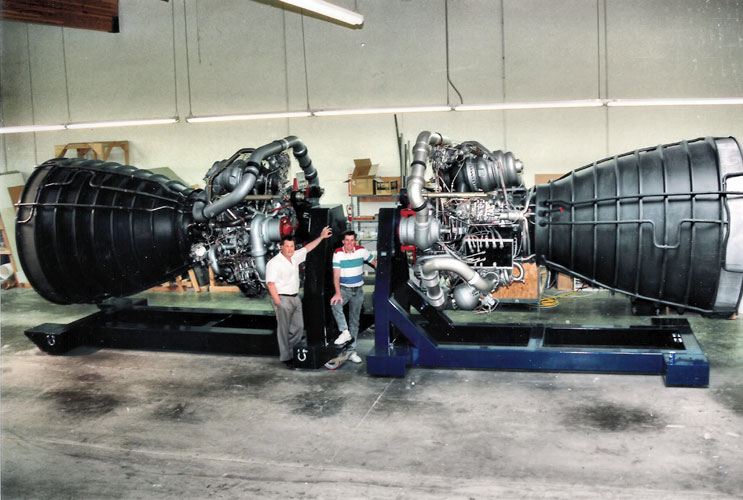
NASA has signed a $36.9 million contract modification to space shuttle main engine manufacturer Pratt & Whitney Rocketdyne of Canoga Park, Calif., to provide continued shuttle main engine prelaunch and launch support from April 1 through July 31.

The contract modification also provides two additional options that if exercised, would bring the potential contract amount for all six months to $56 million.

This modification supports the flyout of the Space Shuttle Program and brings the total potential value of the contract to $2.29 billion. The original contract began on Jan. 1, 2002.

The majority of the work will take place at Pratt & Whitney Rocketdyne's headquarters in Canoga Park.

Three main engines and two solid rocket boosters provide the thrust to launch the space shuttle. At 14-feet long and seven-and-a-half feet in diameter at the nozzle exit, the liquid propellant main engines have a combined thrust of more than 1.2 million pounds.

Scientists recently completed a series of nighttime, ground-based testing of the German Receiver for Astronomy at Terahertz Frequencies, or GREAT, spectrometer in preparation for a series of astronomical science flights on the Stratospheric Observatory for Infrared Astronomy in April. With the SOFIA 747SP aircraft positioned on the ramp outside NASA’s Dryden Aircraft Operations Facility, the upper door covering the telescope was opened and GREAT’s interaction with the telescope was evaluated.

The GREAT instrument is a receiver for spectroscopic observations at far-infrared frequencies between 1.2 and 5 terahertz (wavelengths between 60 and 250 microns). Those wavelengths are not accessible from ground-based telescopes because of atmospheric water vapor absorption.

GREAT is one of two first-generation instruments built for SOFIA by a consortium of German research institutes, including the Max Planck Institute for Radio Astronomy, the University of Cologne, the German Aerospace Center and the Max Planck Society. The Max Planck Society and German Research Society financed the development of the instrument.

SOFIA is a joint venture of NASA and the German Aerospace Center DLR. NASA supplied the aircraft and the telescope was built in Germany. NASA’s Dryden Flight Research Center manages the SOFIA program. NASA's Ames Research Center at Moffett Field, Calif., manages SOFIA's scientific mission. The Universities Space Research Association, in Columbia, Md., and the German SOFIA Institute in Stuttgart, Germany, operate SOFIA's scientific mission operations respectively for NASA and the DLR.

NASA has selected five potential discoverers as the recipients of the 2011 Carl Sagan Postdoctoral Fellowships, named after the late astronomer. The Carl Sagan Fellowship takes a theme-based approach, in which fellows will focus on compelling scientific questions, such as "Are there Earth-like planets orbiting other stars?"

Sagan once said, "Somewhere, something incredible is waiting to be known," which is in line with the Sagan Fellowship's primary goal: to discover and characterize planetary systems and Earth-like planets around other stars. Planets outside of our solar system are called exoplanets. The fellowship also aims to support outstanding recent postdoctoral scientists in conducting independent research broadly related to the science goals of NASA's Exoplanet Exploration Program.

Previous Sagan Fellows have contributed significant discoveries in exoplanet exploration. including: the first characterizations of a super-Earth's atmosphere using a ground-based telescope; and the discovery of a massive disk of dust and gas encircling a giant young star, which could potentially answer the long-standing question of how massive stars are born.

"The Sagan Fellowship program seeks to identify the most highly qualified young researchers in the field of exoplanets. Nowhere is the dynamism of this young branch of astronomy demonstrated more dramatically than by the intellectual quality and enthusiasm of these five new Sagan Fellows," said Charles Beichman, executive director of the NASA Exoplanet Science Institute at the California Institute of Technology in Pasadena. "These scientists are certain to be leaders of this exciting and rapidly growing field for many years to come."

The program, created in 2008, awards selected postdoctoral scientists with annual stipends of approximately $64,500 for up to three years, plus an annual research budget of up to $16,000. Topics range from techniques for detecting the glow of a dim planet in the blinding glare of its host star, to searching for the crucial ingredients of life in other planetary systems.

NASA's Stardust spacecraft sent its last transmission to Earth at 4:33 p.m. PDT (7:33 p.m. EDT) Thursday, March 24, shortly after depleting fuel and ceasing operations. During a 12-year period, the venerable spacecraft collected and returned comet material to Earth and was reused after the end of its prime mission in 2006 to observe and study another comet during February 2011.

The Stardust team performed the burn to depletion because the comet hunter was literally running on fumes. The depletion maneuver command was sent from the Stardust-NExT mission control area at Lockheed Martin Space Systems in Denver. The operation was designed to fire Stardust's rockets until no fuel remained in the tank or fuel lines. The spacecraft sent acknowledgment of its last command from approximately 312 million kilometers (194 million miles) away in space.

"This is the end of the spacecraft's operations, but really just the beginnings of what this spacecraft's accomplishments will give to planetary science," said Lindley Johnson, Stardust-NExT and Discovery program executive at NASA Headquarters in Washington. "The treasure-trove of science data and engineering information collected and returned by Stardust is invaluable for planning future deep space planetary missions."

After completion of the burn, mission personnel began comparing the computed amount of fuel consumed during the engine firing with the anticipated amount based on consumption models. The models are required to track fuel levels, because there are no fully reliable fuel gauges for spacecraft in the weightless environment of space. Mission planners use approximate fuel usage by reviewing the history of the vehicle's flight, how many times and how long its rocket motors fired.

"Stardust's motors burned for 146 seconds," said Allan Cheuvront, Lockheed Martin Space Systems Company program manager for Stardust-NExT in Denver. "We'll crunch the numbers and see how close the reality matches up with our projections. That will be a great data set to have in our back pocket when we plan for future missions."

Launched Feb. 7, 1999, Stardust flew past the asteroid named Annefrank and traveled halfway to Jupiter to collect the particle samples from the comet Wild 2. The spacecraft returned to Earth's vicinity to drop off a sample return capsule eagerly awaited by comet scientists.

NASA re-tasked the spacecraft as Stardust-NExT to perform a bonus mission and fly past comet Tempel 1, which was struck by the Deep Impact mission in 2005. The mission collected images and other scientific data to compare with images of that comet collected by the Deep Impact mission in 2005. Stardust traveled approximately 21 million kilometers (13 million miles) around the sun in the weeks after the successful Tempel 1 flyby. The Stardust-NExT mission met all mission goals, and the spacecraft was extremely successful during both missions. From launch until final rocket engine burn, Stardust travelled approximately 5.69 billion kilometers (3.54 billion miles).

After the mileage logged in space, the Stardust team knew the end was near for the spacecraft. With its fuel tank empty and final radio transmission concluded, history's most traveled comet hunter will move from NASA's active mission roster to retired.

"This kind of feels like the end of one of those old western movies where you watch the hero ride his horse towards the distant setting sun -- and then the credits begin to roll," said Stardust-NExT project manager Tim Larson from NASA's Jet Propulsion Laboratory in Pasadena, Calif. "Only there's no setting sun in space."

Stardust and Stardust-NExT missions were managed by JPL for NASA's Science Mission Directorate in Washington. The missions were part of the Discovery Program managed at NASA's Marshall Space Flight Center in Huntsville, Ala. Joe Veverka of Cornell University was the Stardust-NExT principal investigator. Don Brownlee of the University of Washington in Seattle was the Stardust principal investigator. Lockheed Martin Space Systems built the spacecraft and managed day-to-day mission operations.


 At 33 minutes after 4 p.m. PDT today, NASA's Stardust spacecraft finished its last transmission to Earth. The transmission came on the heels of the venerable spacecraft's final rocket burn, which was designed to provide insight into how much fuel remained aboard after its encounter with comet Tempel 1 in February.
"Stardust has been teaching us about our solar system since it was launched in 1999," said Stardust-NExT project manager Tim Larson from NASA's Jet Propulsion Laboratory in Pasadena, Calif. "It makes sense that its very last moments would be providing us with data we can use to plan deep space mission operations in the future."

The burn to depletion maneuver was designed to fire Stardust's rockets until insufficient fuel remains to continue, all the while downlinking data on the burn to Earth some 312 million kilometers (194 million miles) away. Mission personnel will compare the amount of fuel consumed in the burn with the amount they anticipated would be burned based on their fuel consumption models.

Fuel consumption models are necessary because no one has invented a reliable fuel gauge for spacecraft when in the weightless environment of space flight. Until that day arrives, mission planners can approximate fuel usage by looking at the history of the vehicle's flight and how many times and for how long its rocket motors have fired.

Mission personnel watched the final data from the burn come down at JPL's Space Flight Operations Facility and at the Stardust-NExT mission support center at Lockheed Martin Space Systems in Denver.
"Stardust motors burned for 146 seconds," said Allan Cheuvront, Lockheed Martin Space Systems Company program manager for Stardust-NExT. "We'll crunch the numbers and see how close the reality matches up with our projections. That will be a great data set to have in our back pocket when we plan for future missions."

The Stardust team performed the final burn to depletion because NASA's most senior comet hunter is a spacecraft literally running on fumes. Launched on Feb. 7, 1999, Stardust had completed its prime mission back in January 2006. By that time, Stardust had already flown past an asteroid (Annefrank), flown halfway out to Jupiter to collect particle samples from the coma of a comet, Wild 2, and returned to fly by Earth to drop off a sample return capsule eagerly awaited by comet scientists. NASA then re-tasked the spacecraft to perform a bonus mission to fly past comet Tempel 1 to collect images and other scientific data. Stardust has traveled about 21 million kilometers (13 million miles) in its journey about the sun in the few weeks since the Valentine's day comet Tempel 1 flyby, making the grand total from launch to its final rocket burn about 5.69 billion kilometers.

With all that mileage logged, the Stardust team knew the end was near. Now, with its fuel tank empty and its final messages transmitted, history's most traveled comet hunter will move from NASA's active mission roster to retired.

"This kind of feels like the end of one of those old Western movies where you watch the hero ride his horse towards the distant setting sun – and then the credits begin to roll," said Larson. "Only there's no setting sun in space."

Stardust-NExT was a low-cost mission to expand the investigation of comet Tempel 1 initiated by NASA's Deep Impact spacecraft. JPL, a division of the California Institute of Technology in Pasadena, managed the Stardust-NExT project for the NASA Science Mission Directorate, Washington, D.C., which was part of the Discovery Program managed by NASA's Marshall Space Flight Center in Huntsville, Ala. Joe Veverka of Cornell University, Ithaca, N.Y., was the mission's principal investigator. Lockheed Martin Space Systems, Denver, built the spacecraft and managed day-to-day mission operations.

X-ray observations made by the Suzaku observatory provide the clearest picture to date of the size, mass and chemical content of a nearby cluster of galaxies. The study also provides the first direct evidence that million-degree gas clouds are tightly gathered in the cluster's outskirts.
Suzaku is sponsored by the Japan Aerospace Exploration Agency (JAXA) with contributions from NASA and participation by the international scientific community. The findings will appear in the March 25 issue of the journal Science.

Galaxy clusters are millions of light-years across, and most of their normal matter comes in the form of hot X-ray-emitting gas that fills the space between the galaxies.

"Understanding the content of normal matter in galaxy clusters is a key element for using these objects to study the evolution of the universe," explained Adam Mantz, a co-author of the paper at NASA's Goddard Space Flight Center in Greenbelt, Md.

Clusters provide independent checks on cosmological values established by other means, such as galaxy surveys, exploding stars and the cosmic microwave background, which is the remnant glow of the Big Bang. The cluster data and the other values didn't agree.

NASA's Wilkinson Microwave Anisotropy Probe (WMAP) explored the cosmic microwave background and established that baryons -- what physicists call normal matter -- make up only about 4.6 percent of the universe. Yet previous studies showed that galaxy clusters seemed to hold even fewer baryons than this amount.

Suzaku images of faint gas at the fringes of a nearby galaxy cluster have allowed astronomers to resolve this discrepancy for the first time.

The satellite's ideal target for this study was the Perseus Galaxy Cluster, which is located about 250 million light-years away and named for the constellation in which it resides. It is the brightest extended X-ray source beyond our own galaxy, and also the brightest and closest cluster in which Suzaku has attempted to map outlying gas.

"Before Suzaku, our knowledge of the properties of this gas was limited to the innermost parts of clusters, where the X-ray emission is brightest, but this left a huge volume essentially unexplored," said Aurora Simionescu, the study's lead researcher at the Kavli Institute for Particle Astrophysics and Cosmology (KIPAC) at Stanford University.

In late 2009, Suzaku's X-ray telescopes repeatedly observed the cluster by progressively imaging areas farther east and northwest of the center. Each set of images probed sky regions two degrees across -- equivalent to four times the apparent width of the full moon or about 9 million light-years at the cluster's distance. Staring at the cluster for about three days, the satellite mapped X-rays with energies hundreds of times greater than that of visible light.

From the data, researchers measured the density and temperature of the faint X-ray gas, which let them infer many other important quantities. One is the so-called virial radius, which essentially marks the edge of the cluster. Based on this measurement, the cluster is 11.6 million light-years across and contains more than 660 trillion times the mass of the sun. That's nearly a thousand times the mass of our Milky Way galaxy.

The researchers also determined the ratio of the cluster's gas mass to its total mass, including dark matter -- the mysterious substance that makes up about 23 percent of the universe, according to WMAP. By virtue of their enormous size, galaxy clusters should contain a representative sample of cosmic matter, with normal-to-dark-matter ratios similar to WMAP's. Yet the outer parts of the Perseus cluster seemed to contain too many baryons, the opposite of earlier studies, but still in conflict with WMAP.

To solve the problem, researchers had to understand the distribution of hot gas in the cluster, the researchers say. In the central regions, the gas is repeatedly whipped up and smoothed out by passing galaxies. But computer simulations show that fresh infalling gas at the cluster edge tends to form irregular clumps.

Not accounting for the clumping overestimates the density of the gas. This is what led to the apparent disagreement with the fraction of normal matter found in the cosmic microwave background.

"The distribution of these clumps and the fact that they are not immediately destroyed as they enter the cluster are important clues in understanding the physical processes that take place in these previously unexplored regions," said Steve Allen at KIPAC, the principal investigator of the Suzaku observations.

Goddard supplied Suzaku's X-ray telescopes and data-processing software, and it continues to operate a facility that supports U.S. astronomers who use the spacecraft.

Suzaku is the fifth Japanese X-ray astronomy satellite. It was launched as Astro-E2 on July 10, 2005, and renamed in orbit. The observatory was developed at JAXA's Institute of Space and Astronautical Science in collaboration with NASA and other Japanese and U.S. institutions.

Space Shuttle Commander Mark Kelly will not be available for media interviews that had been scheduled from 3 p.m.-5 p.m. CDT Thursday, March 24, at the agency's Johnson Space Center in Houston. Kelly will participate in a previously scheduled news conference with his crew at 2 p.m. CDT Thursday to discuss their upcoming STS-134 shuttle mission to the International Space Station.

The news conference will air live on NASA Television and the agency's website.

The other STS-134 crew members, pilot Greg H. Johnson and Mission Specialists Michael
Fincke, Greg Chamitoff, Andrew Feustel and European Space Agency astronaut Roberto Vittori, will be available for previously scheduled interviews from 3 p.m.-6 p.m. CDT Thursday.

All other Thursday briefings related to the STS-134 mission remain as planned.